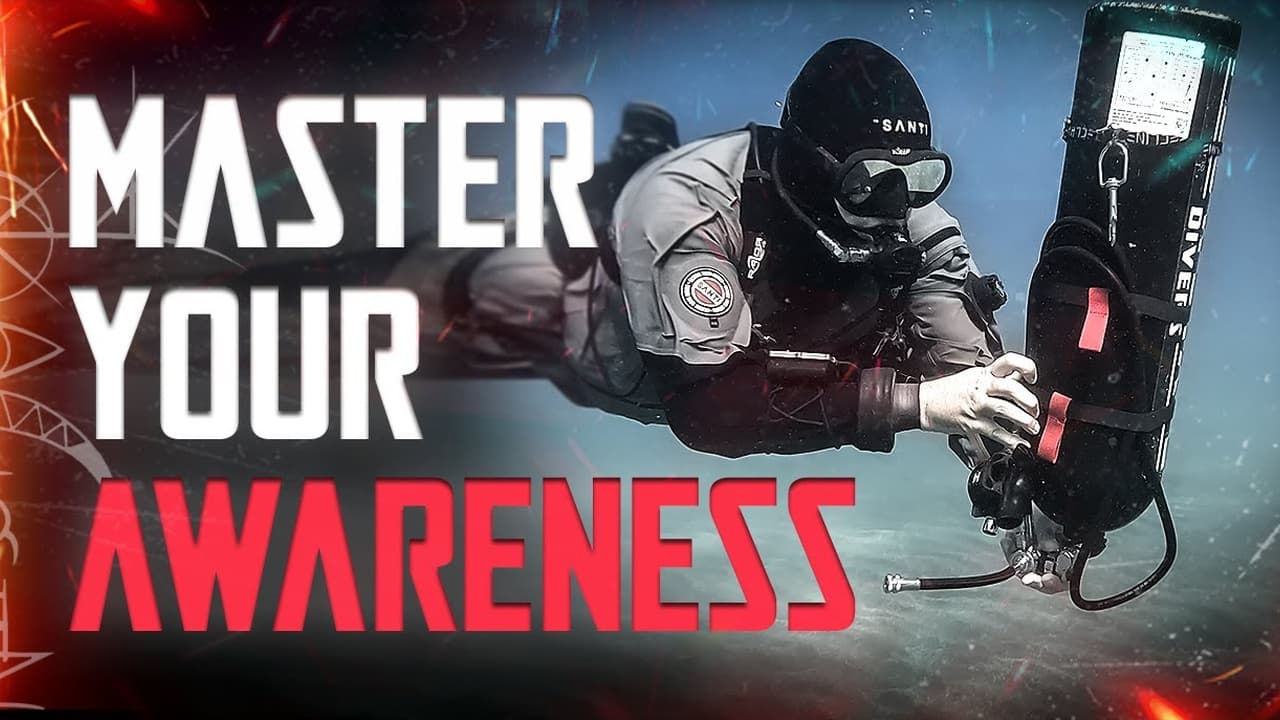
One of the most deceptively difficult tasks in scuba diving is learning to do absolutely nothing - deliberately, calmly, and in perfect balance. While the underwater world is often celebrated for its motion - gliding rays, drifting currents, the slow dance of coral polyps - true mastery lies in stillness. Holding trim without flinching, remaining motionless in perfect horizontal alignment, is not merely a technical skill. It is a reflection of control, awareness, and a deep understanding of the body’s role in buoyancy and movement.
Yet, this critical component of advanced diving - optimal trim and posture - is all too often glossed over in mainstream training. Even seasoned divers may find themselves puzzled when proper weight distribution fails to correct their balance issues. Why? Because true horizontal trim is not just a function of where the lead sits on your rig. It is built in the body, sculpted by subtle yet constant muscle engagement and the art of posture.
At first glance, achieving trim appears to be a mechanical issue. Shift a weight pouch here, move a tank band there, and presto - neutral balance. But divers quickly learn that no amount of tweaking gear positions will keep them stable if the body itself behaves like an unbalanced seesaw.
This is because the secret lies not in where the weights are placed, but in how the diver’s body holds itself. You may be perfectly weighted, your cylinders perfectly aligned, yet still find yourself rolling, tilting, or fighting to remain flat. The root cause? Posture - and the muscles that hold it.
Posture: The True Trim Enabler
Body posture underwater refers to the deliberate alignment and control of your torso, legs, and limbs, and it plays a pivotal role in maintaining trim. At the heart of this lies the concept of “muscle coordination” - the quiet engagement of specific muscles that keep the diver stable and aligned without needing constant motion.
A properly trimmed diver maintains a straight line between the shoulders, hips, and knees. This alignment should remain perfectly horizontal while the diver is still, swimming, or descending. Achieving and maintaining this position requires awareness, discipline, and physical conditioning.
And here’s the nuance: this isn’t brute tension or rigid clenching. It’s a gentle activation of the right muscle groups - the shoulder blades drawn subtly together, the glutes slightly engaged, the thighs gently firm. It's a fine balance between too little tension (leading to sagging knees or dropping hips) and too much (which leads to cramps, fatigue, or exaggerated arching).
Most divers don't realise how much they compensate for poor posture by moving. Constant finning, subtle torso twists, or micro-adjustments aren’t signs of control - they’re signs of imbalance. This unconscious movement masks the underlying issue of poor trim, resulting in higher gas consumption, reduced efficiency, and even mental fatigue.
Worse still, when divers are in motion - especially during descents - they often miss these cues. They attribute instability to water conditions or buoyancy fluctuation, rather than internal misalignment. This leads to disorientation, issues with equalisation, and a disrupted connection with teammates during what is arguably one of the most vulnerable stages of a dive.
The descent phase magnifies the consequences of poor posture. Tilting, rolling, or an uncontrolled angle can separate a diver from their team, increase the likelihood of missing a target depth or reference point, and complicate equalisation. Engaging the right muscles during descent allows for a clean, controlled drop, where the diver can focus on critical checks, remain close to teammates, and respond swiftly to any arising issue.
Remember: stability equals readiness. A diver who begins their descent already balanced and in control lays the foundation for a successful and confident dive.
The lower body plays a surprisingly significant role in achieving good trim. Once the upper body is stabilised, the legs must follow suit. Common practice - bending the knees at 90 degrees with fins up near the bum - can, in many cases, lead to instability. The weight distribution becomes too rear-heavy, leading to a see-saw effect and constant overcorrection.
Instead, try a more natural positioning: a 45-degree bend at the knee with the thighs and lower legs creating an open angle. Keep your fins aligned flat behind you. This posture supports a streamlined profile and eases the demand on your muscles to hold trim.
A diver’s legs should become an extension of their streamlined core - not flailing paddles but steady rudders helping maintain direction and balance.
Proper posture isn't just about holding still - it directly enhances your ability to move efficiently. Without engagement of the glutes, thighs, and shoulders, even fundamental finning techniques like the frog kick suffer. Drooping knees and poor alignment drag against the water, increasing resistance and requiring more force to move.
By using proper muscle tension throughout the dive - whether holding still or swimming - you maintain trim and streamline. This reduces drag, conserves energy, and significantly lowers gas consumption.
Put simply: proper posture equals streamlined motion.
The best way to internalise posture is to practise it outside the water. Dry training creates the muscle memory needed to transfer the technique into diving conditions.
Dryland Posture Drill
- Lie flat on a firm surface.
- Look forward and lift your head slightly.
- Extend your arms in a soft "V" in front of you.
- Retract your shoulder blades toward each other.
- Engage your glutes to lock your hips forward.
- Squeeze your thighs gently.
- Bend your knees to roughly 45 degrees, keeping your ankles flexed and fins (if imagined) flat.
You should feel mild tension in your lower back, shoulders, and thighs. If you’re cramping, you’re over-tensing. If you feel nothing, you’re likely too relaxed. Balance is the goal.
To maintain posture over long dives, divers need more than technique - they need strength. Here are two time-tested exercises to develop the core muscle groups that stabilise trim:
1. Glute Bridge (Hip Raise)
- Lie on your back, knees bent, feet flat.
- Press shoulders and lower back into the ground.
- Raise your hips until your body forms a straight line from shoulders to knees.
- Squeeze glutes and abdominals at the top. Avoid overarching.
- Advanced: Extend one leg while lifting.
2. Superman Hold
- Lie face down, arms extended forward, legs straight.
- Gently lift both arms and legs off the floor.
- Engage your lower back, glutes, and shoulder blades.
- Hold for 2–3 seconds, then lower.
- Progress by holding light weights or increasing hold duration.
Regularly performing these drills will develop the endurance and control required for effortless in-water posture.
Perfect trim isn’t about showing off or appearing “technical.” It’s about competence, control, and conservation. When a diver can hold themselves effortlessly still in midwater, their presence becomes calm, efficient, and in tune with the environment.
From smoother descents and easier finning to increased confidence in emergencies, the benefits are profound. But most of all, mastering stillness transforms a dive from a series of movements into a graceful state of being. That transformation begins not with a gadget or a gear hack - but with the body itself.
So the next time you gear up and roll into the blue, remember: true mastery begins with posture. And the art of doing nothing may just be the most powerful skill you ever learn.