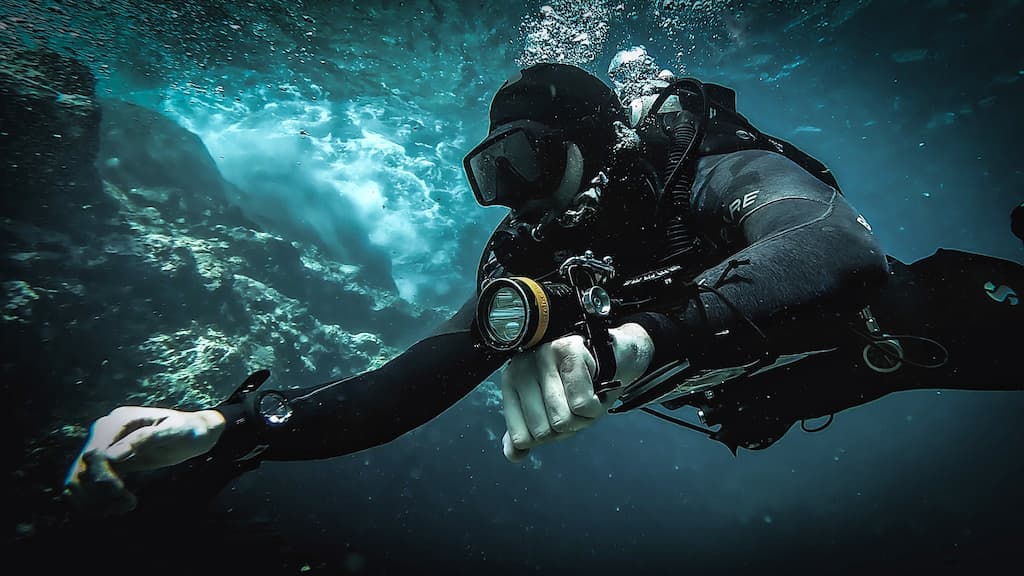
Beyond Buddies - Building Real Dive Teams
The buddy system was born in military and scientific diving - pairing trained, trusted teammates who planned, drilled, and executed as one. But in modern recreational diving, it’s often reduced to matching strangers minutes before a descent, turning a once-reliable safety net into a hollow ritual.
A Brief History of the Buddy System
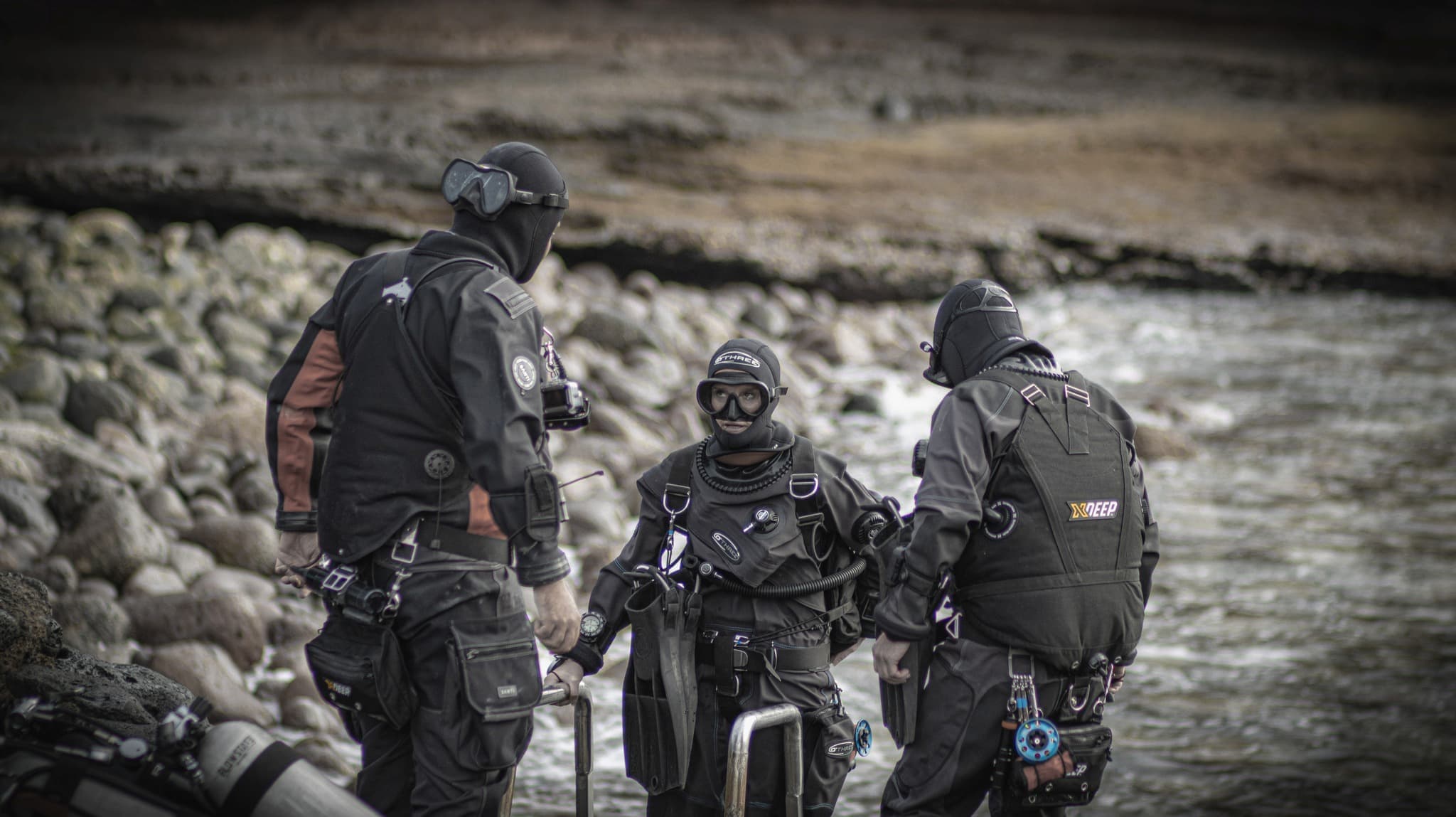
When recreational diving emerged in the 1950s and 60s, the buddy system came along for the ride. It was simple, easy to teach, and offered a veneer of safety. Dive with a buddy, and you wouldn’t be alone if something went wrong. In theory.
But as diving became commercialised, priorities shifted. Training agencies sought to make diving more accessible and affordable. Courses shortened. Dive centers emphasised volume over depth - churning out certifications, not divers. Group sizes ballooned. Instructor-to-student ratios grew. And the buddy system transformed from a disciplined protocol into a perfunctory formality.
The result? A hollow ritual. Masked by good intentions, reduced to box-ticking: air check, OK sign, descend.
It became a liability disguised as safety.
When Dive Buddies Are Complete Strangers
Halfway through the dive, something happens. She never finds out what. He twitches, yanks at his mask, then rockets to the surface, kicking wildly. Her eyes widen. They’re at 25 meters. She freezes. He’s gone. The guide doesn’t see it. No one else reacts.
That cold, hollow feeling? It’s not just about the emergency. It’s about betrayal - by a system that promised safety through partnership, but delivered isolation.
This isn’t a rare story. It’s the standard architecture of modern dive holidays.
The industry quietly depends on strangers pairing up underwater. It happens every day, in every tropical port. Divers are shuffled like playing cards into pairs: language barriers, mismatched experience, unclear expectations. And yet, the system still stamps it 'safe' because a box was ticked: 'Has a buddy? Check.'
But real trust doesn’t form a quick introduction. It grows through rehearsed failure, through debriefs, through aligned objectives and tested reactions. None of that fits into the 45-minute turnaround between a boat briefing and the backward roll.
This is not just a logistical issue. It’s a psychological impossibility.
Shallow Social Contracts
When things go sideways underwater, we don’t rise to the occasion, we fall to our training. Or worse: to our instincts. And instinct is rarely the friend of good decision-making at depth. The fight-or-flight response, so useful on land can be catastrophic underwater. A panicked bolt to the surface. A frozen stare during an emergency. A missed signal that was meant to save a life.
In these moments, the brain scrambles for patterns, for reassurance, for familiarity. But with a stranger, there are none to be found. You don’t know if that twitch of the hand is a signal or just nervous fidgeting. You don’t know how they handle stress - whether they go silent, speed up, or retreat inward. You don’t know what calms them down - or sets them off.
And so you guess. And guessing underwater is deadly.
Even more dangerous is the illusion of safety. The buddy system suggests that simply having someone next to you is enough. But presence isn’t the same as preparedness. Proximity isn’t partnership. You can be one fin length apart and still be utterly alone.
True diving safety isn’t about having a body in sight. It’s about having a mind beside you - trained, attuned, and trustworthy.
And that kind of trust is never assigned. It’s earned.
What Is a Dive Team?
A dive team is not just two people diving together. It’s not proximity. It’s not matching gas or agreeing on a turn pressure. A real team is two or more divers operating as one cohesive, adaptive unit. A system forged through practice, communication, and mutual accountability.
A team trains for failure. They don’t hope it won’t happen, they plan for when it does. They rehearse gas-sharing while neutrally buoyant. They simulate catastrophic loss, and they do it without breaking trim. They know each other’s movements, protocols, and tells. Roles are clear. Responsibilities are divided. No one is waiting to be told what to do.
In systems thinking, a team is what’s called a complex adaptive system. That’s more than metaphor, it’s biology. It’s ecology. It’s a distributed organism with feedback loops and real-time responsiveness. One diver senses a problem; the other notices the shift in posture. One starts an action, the other anticipates the next step without needing it spelled out. Corrections happen before words are needed.
Where one diver’s attention falters, another’s compensates. Where one hesitates, the other fills the gap. The team becomes the redundancy - fluid, seamless, and quietly robust.
The Shared Mind
In diving, this shows up as mirrored positioning. As a subtle glance confirming gas without needing a signal. As an automatic redistribution of roles when one diver encounters a task load spike. You don’t have to ask for help - it’s already on the way.
Together, a trained team becomes smarter, safer, and more capable than the sum of its parts. That’s not just better diving. It’s better thinking.
From Codependency to Interdependence
The buddy system, as it’s commonly taught, is a fragile construct. Two strangers agree to watch each other, yet the agreement is often superficial, based more on policy than on practice. This model easily devolves into passive codependency: one diver quietly hoping the other will notice their distress, intervene in a crisis, or simply not make things worse. It's not trust. It's a gamble.
By contrast, a dive team is built on interdependence - a state where each member is both sovereign and accountable. It’s not about equality of skill, but equality of engagement. Everyone is switched on. Everyone is watching. Everyone is responsible. There is no leaning back and waiting. There is only leaning in.
This is a philosophical shift.
This kind of bond doesn’t arise from being paired up on a boat. It grows in the quiet spaces between dives:
In the debrief, when someone says, 'I messed up,' and no one flinches. In the drill that’s run slowly, awkwardly, again and again. In the moment when someone says, 'I wasn’t ready,' and the team adjusts - not with judgment, but with care.
Trust, in this form, is not a feeling. It’s a craft.
It’s built like muscle: through resistance, repetition, and repair.
It isn’t perfect. It doesn’t need to be.
But it must be conscious. Earned. Practiced.
In that space, something remarkable happens.
Divers stop waiting for rescue. They start offering rescue - proactively, habitually, intuitively.
They don't just look at gauges. They look at each other.
Not because they doubt. But because they care and because they have the mental bandwidth available.
And in that moment - beneath the surface, where words fall away - a true team emerges.
The Thunderbirds Analogy
Consider the U.S. Air Force Thunderbirds, one of the most elite flight demonstration teams on the planet. They operate F-16 fighter jets at over 600 miles per hour, sometimes with just a wingspan of distance between them. At that speed, there’s no time for second-guessing. No room for individual improvisation. Every pilot must fly their role with unwavering precision, trusting that their teammates are doing the same.
This isn’t about individual excellence. It’s about synchronised excellence. And it only works because they operate with blind trust. Not blind in the naive sense, but blind in the operational sense. They don’t need to check because they know their teammates are where they’re supposed to be, doing what they’re supposed to do.
That’s exactly what a high-level dive team aspires to.
When diving is done right, the team moves like a single pilot with multiple bodies. That’s not magic. It’s training.
How Teams Are Forged
This is how teams are forged:
In deliberate discomfort.
In long hours of repetition.
In the humble discipline of being willing to fail, publicly, and try again.
They rehearse gas failures until the handoff is silent, graceful, precise.
They flood and clear masks until it no longer rattles the breath.
They run out-of-gas drills until it’s not dramatic, it’s just the next move.
They don’t stop when it works once. They stop when it never doesn’t.
But technique is only part of it. The real forging happens in the space between drills.
In the critique that lands not as ego-bruising, but as an act of service.
In the quiet nod after a hard dive. In the look that says, 'I’ve got you.'
Weeks later, in a real silt-out, the visibility dropped to zero. No warning. No time to think.
One diver reached out. Found a hand. Then a knee. Then the line.
No panic. Just movement. Just flow.
The chaos outside met calm inside.
What could have been a crisis became choreography.
Training had become instinct. And instinct had become team.
This is not magic. It’s not even talent. It’s a choice. A process. A kind of devotion.
Because in the end, high-functioning teams aren’t born.
They’re built. Repetitively. Imperfectly.
And always together.
Ego Dissolution and the Team Mind
To enter the water as a team is to leave behind the illusion of rugged independence. Down there, under pressure - literal and psychological - the myth of the self-contained diver evaporates. The currents don’t care how competent you are alone. The cave, the wreck, the blackwater, all indifferent. What matters is coordination. Co-regulation. Co-awareness.
The seasoned diver knows: mastery is not about domination of the environment. It’s about yielding, tuning in, and distributing control.
Not hierarchy - harmony.
Flow psychology tells us that deep focus, creativity, and peak performance arise not from ego inflation, but ego dissolution. In this state, we do not act, we are acted through. Muscles respond without command. Awareness becomes panoramic. Time dilates.
In great teams, this isn't just an individual phenomenon, it’s collective.
The team becomes a distributed intelligence. A living organism. Each member a neuron in a larger nervous system. One reaches, the other senses. One acts, the other adjusts. There is no need to speak. The dive is the conversation.
The Myth of the Hero Diver
Modern diving - especially in media - still worships the archetype of the solitary saviour. The maverick. The deep soloist lit by torchlight, silhouetted against the abyss.
But strip away the cinematics, and you're left with a dangerous myth: that survival is a product of individual brilliance.
The truth is sharper: under stress, the solo hero becomes a risk - first to themselves, then to others. Decision fatigue sets in. Situational awareness narrows. And when something fails, there's no redundancy, no cross-check, no second mind to notice.
True mastery is quieter.
It’s not in the grand gesture but in the micro-adjustment. Not in bravado, but in readiness to say:
I need you watching this while I focus on that.
Double-check me, I might have missed something.
Let’s go through that drill again, I want it tighter.
The hero diver is a fantasy.
The silent guardian is the future. The diver who understands that gear is only half of resilience—the other half is human. The right human. Trained. Aligned. Aware.
The Myth of the 'Solo Instructor'
This idea is not only wrong - it’s dangerous.
What it reveals is a fundamental misunderstanding of what redundancy and safety really mean in diving. It equates competence with invincibility and overlooks the very systems we claim to rely on. Worse still, it creates a false narrative that can discourage real teamwork and mutual responsibility, even in training.
Let’s break it down.
Because here’s the truth: even a brand-new student brings redundancy to the system.
They have a second regulator. They carry a tank of breathing gas. They have fins, a mask, a BCD - and a second brain that, while still developing in underwater competence, is conscious, responsive, and capable of learning. That’s not nothing. That’s not 'alone.'
To call this solo diving is like saying a pilot flying with a student in the cockpit is flying alone. Technically, sure - the student may not be ready to land the plane. But they are a functioning set of eyes, ears, and limbs that can act under instruction. They can relay a message, hand over a tool, respond to a prompt, or initiate a practiced protocol. Even in training, they are part of the system.
This is not about pretending a student can perform at an expert level. It’s about recognising that a second set of gear and a second set of lungs still count in a crisis. That two imperfect divers are still safer than one - when they’re working together.
Because safety isn’t about matching skill. It’s about matching engagement.
This myth also sets a dangerous precedent for students. If they come to believe that their instructor was alone - that they were a non-entity in the dive — what does that teach them about their own role later? That they’re not responsible for others? That unless they’re experts, they don’t count?
That’s how passive, ineffective buddies are created: people who float next to each other thinking, 'I’m no expert, I’ll just follow,' rather than, 'I’m part of this dive, I’m responsible too.'
A real team, even in training, doesn’t emerge from equality of skill. It grows from mutual contribution. That’s what instructors foster when they break the myth of solo diving and invite their students into awareness, into redundancy, into responsibility.
Because when an instructor trains a student to be a thinking diver, the system gets stronger. Not in some future dive, in that very moment.
Real vs. Imagined Safety
Fifteen minutes into a night dive, a team makes a decision: turn the dive. No visible threat. No loud alarms. Just a missed light signal, a flash that might have been delayed, dimmed, or misread. It was small. So small that many divers wouldn’t have noticed it, let alone acted on it.
But this team did. They didn’t ask whether it was a problem. They asked whether it could be. And in the vast, indifferent stillness of the ocean, that question carries all the weight in the world.
Back on land, the debrief reveals the cause: a dying battery, an aging O-ring letting in just enough moisture to dim the beam for a heartbeat. No one was in danger. But no one needed to be. That wasn’t the point.
The point is that real safety is rarely obvious. It's not defined by whether something bad happens - it’s defined by how you behave before anything does.
In diving, there's a dangerous illusion that safety is proven by success. If the dive ends well, it must have been safe. If no one gets hurt, the plan must have worked. But this logic is flawed. The most hazardous dives are often the ones that go smoothly by chance, not design. And the safest dives are sometimes the ones that get called early, when something felt wrong—something that would never show up on a computer log.
Safety isn’t a result. It’s a philosophy.
A way of seeing. A posture of humility toward the environment and its unknowns.
Real safety means operating from principles, not emotions. It means trusting your gut when something feels off, even if you can't explain why. It means listening to the quiet voice that says this could turn, rather than the louder one that says don’t be dramatic.
Perceived safety is seductive. It comes dressed as confidence, familiarity, even enjoyment. It's easy to feel safe when you're comfortable—when the water is warm, your breathing is easy, your buddy smiles back at you. In that state, it’s tempting to discount the small anomalies. A missed signal. A hesitation. A flicker of doubt.
You tell yourself: If there were really a problem, it would be clearer than this.
You silence the doubt because it’s inconvenient. You press on. You don’t want to be the one who ends a good dive 'for nothing.'
But nothing in diving is ever for nothing. Everything is for something. The ocean doesn’t care what you intended. It only reflects what you did. And it offers no forgiveness for the arrogance of hindsight.
In such a team, no one feels the need to prove they can handle it. Instead, they prove they can listen. They can be honest. They can accept that they don’t need to ride the edge of risk to have a meaningful experience.
That flicker in the dark was more than just a battery dying. It was a test. Not of skill, but of awareness. It asked: Do you notice the small things? Do you respond even when it's inconvenient? Do you choose the boring decision that no one will applaud?
That’s what real safety looks like. It’s invisible to those who never needed it. But it’s everything when you do.
In the end, diving teaches us that the difference between real and imagined safety is often nothing more than a whisper - a flicker of light in the dark, a feeling in the gut, a teammate’s hesitation.
Those who treat safety as an act of bravado may never know they've built their confidence on sand. Those who treat safety as a dialogue - with the water, with their teammates, with themselves - build something stronger: trust, resilience, and the kind of quiet confidence that can hold steady when the lights go out.
In diving, as in life, the question isn’t whether you feel safe.
The question is whether you are.
And the answer, more often than not, is written in the moments you’re willing to turn back.
The Team Is the Technique
Perfect buoyancy. Streamlined gear. Conscious, measured breathing, self and team awareness.
To the casual observer, these appear as isolated skills - boxes to check, marks of proficiency, signs that a diver 'knows their stuff.' But to the trained eye they are something else entirely.
They are not personal achievements.
They are offerings of reliability. Acts of grace. The quiet commitment you make to everyone around you: I will not be the source of stress. I will not be the unknown quantity.
There is a strange and beautiful paradox in high-level diving: the better you become, the less you need to be noticed. Mastery is not loud. It doesn’t seek attention. It offers it to the task, to the environment, and to the team.
The team becomes the field in which your skill expresses itself. And that skill is only as meaningful as the freedom it grants others. The true reward is not the applause of an audience but the absence of distraction, the mutual ease, the almost telepathic coordination that arises when no one needs to speak and yet everything is understood.
This is not solo performance masquerading as partnership.
This is symbiosis in motion.
A coalescing of attentions. A merging of awareness. Each diver extending their perception to include the others not just to see them, but to feel them. To notice their rhythm. To hold their space.
In the best teams, there emerges something beyond coordination, something nearly biological. Like a flock of birds turning mid-flight, or a school of fish shifting shape without a leader. Divers begin to act not in parallel, but as one. What one sees, all consider. What one senses, all respond to. The individual ego is not erased, but reoriented, it points outward instead of inward.
This is the team mind, a kind of distributed consciousness.
It doesn't come from rules. It comes from trust.
And trust is built not in words, but in consistency. In presence. In skill honed for the sake of others.
You learn your gear inside and out not to prove your expertise, but so that your teammate never has to doubt what you’re doing. You practice your shutdowns not to win the clock, but so that under stress, you can act with a still hand and a clear mind. You trim your cylinders not for style, but because every inefficiency you eliminate is one less puzzle piece your teammate must solve under pressure.
The better you dive, the more bandwidth your presence offers to the team. You become low-maintenance. Predictable. Dependable. And in that dependability, the team grows more powerful than the sum of its parts.
In this view, technique becomes something more than mechanical - it becomes emotional. Spiritual, even.
Training That Transforms
At FlowState Divers, we cultivate something far deeper than certifications or surface-level competence. What emerges from our training is a transformation - one that reshapes how divers think, act, and relate beneath the surface. They return not simply more skilled, but profoundly changed: as teammates who move as one.
These divers learn to feel the group. They sense shifts before signals are needed. They offer leadership in moments of uncertainty, yet surrender it without ego when others are better placed. They protect through more than gear checks, they protect through presence, anticipation, and empathy. Their questions change. No longer centered on 'What do I need?', they ask, 'What does my team need? How do I carry part of the burden?'
Every stage of the dive - preparation, descent, exploration, ascent, reflection - is practiced not as isolated roles but as a single, fluid choreography. It becomes a ritual of trust, awareness, and cooperation. Here, competence becomes connection. Here, a certification becomes something rarer: the formation of a dive team that thinks, breathes, and acts together.