
DIR Diving Series - The Fundamental Principles
DIR aka ‘Doing It Right’ is the epitome of the minimalist philosophy. The term describes a holistic approach to scuba diving that encompasses several essential elements, including fundamental diving skills, teamwork, physical fitness, streamlined and minimalistic equipment configuration. DIR proponents maintain that through these elements, safety is improved by standardising equipment configuration and dive-team procedures for preventing and dealing with emergencies.
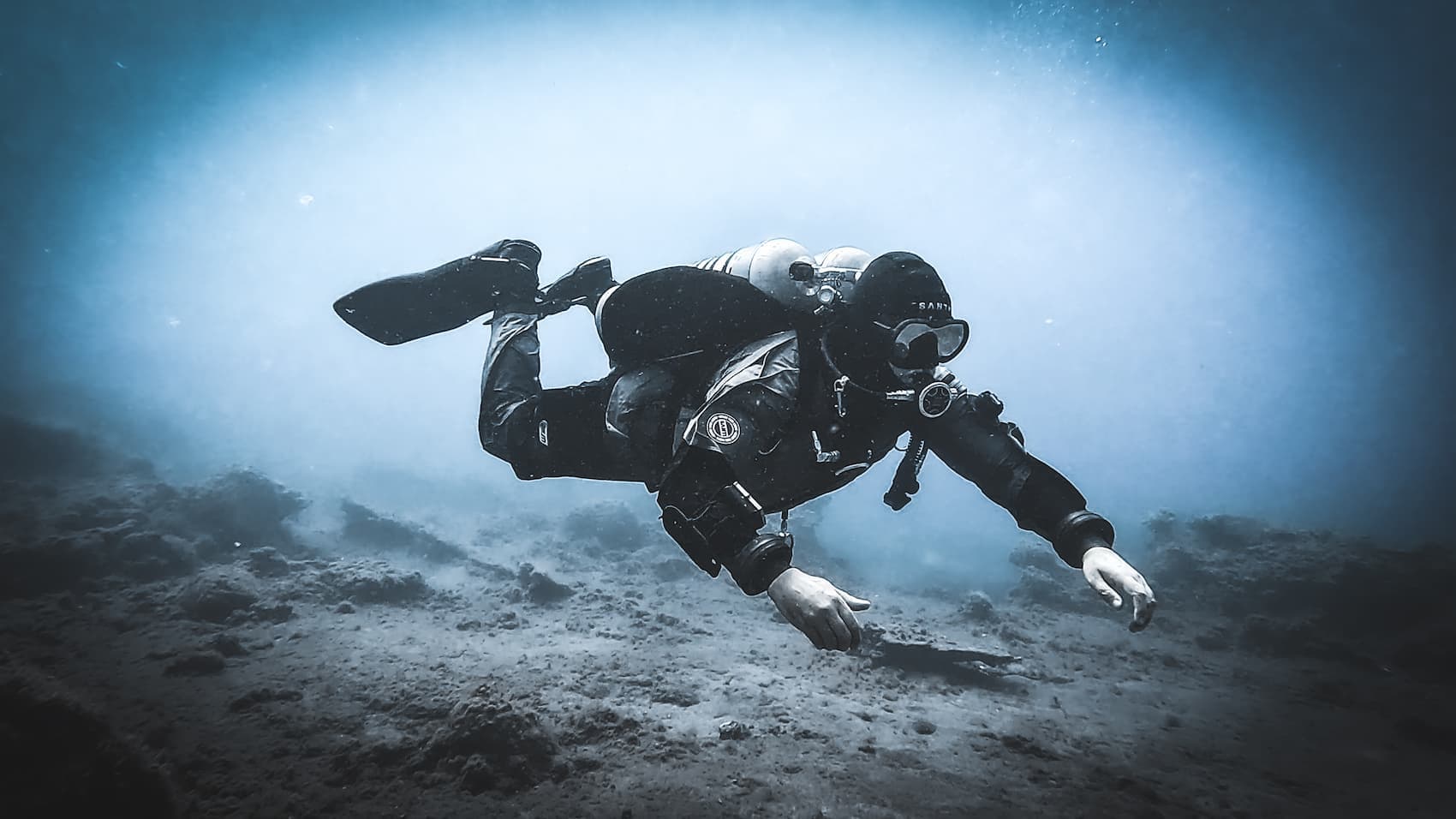
This article will explore the fundamental principles behind DIR and how it improves safety by standardising equipment configuration and dive-team procedures for preventing and dealing with emergencies as well as diving in mixed-team setups.
The Origins of DIR
The DIR (Doing It Right) approach originated in the early 1990s through the efforts of the Woodville Karst Plain Project (WKPP) - a team dedicated to the systematic exploration and mapping of the extensive underwater cave systems in northern Florida. Faced with the extreme demands and dangers of deep, complex cave penetrations, the WKPP sought to minimise risks and eliminate the high fatality rates that had long plagued the cave diving community. Key figures like Jarrod Jablonski, George Irvine, and Bill Gavin played a central role in refining what would become the DIR system - a holistic, standardised approach to equipment configuration, dive planning, team protocols, and mindset. Earlier pioneers such as Sheck Exley and William "Hogarth" Main heavily influenced the foundational ideas, especially regarding equipment streamlining and decompression theory. The "Hogarthian" gear setup, named after Main’s minimalist philosophy - became a core component of the DIR system. Over time, DIR evolved beyond cave diving, influencing technical and recreational diving communities worldwide by promoting safety through consistency, redundancy, and an uncompromising emphasis on team cohesion and competence.
During that period, there was a significant focus on not just maximising mission effectiveness and minimising risk but also reducing the mortality rate in cave diving, which was recognised as the most deadly sport with the highest mortality rate worldwide at the time. As a result, a straightforward yet stringent and efficient configuration began to emerge, aiming to eliminate unnecessary elements while optimising the essential ones. It is truly remarkable how this fundamental concept has endured over time. Despite the growing popularity of technical diving and rapid advancements in equipment and technology, the DIR philosophy has continued to adapt exceptionally well. In fact, modern technical divers increasingly resemble their cave-diving predecessors.
Although most certification agencies and insurers consider recreational diving to carry acceptably low risk, the DIR philosophy was deliberately extended into this field for a more important reason: the widespread use of non-standardised equipment in recreational diving forces divers to unlearn and relearn core skills the moment they move toward more challenging environments. Since recreational diving is where most people begin their journey, there's no good reason not to teach proper, standardised practices from the start, doing so reduces confusion later and supports a much smoother development path.
The Evolution
Over time, the DIR setup has evolved into a standardised configuration that is widely used by cave, deep mixed gas, and recreational divers Today. The current configuration includes a backplate, wing, and harness system, along with a regulator, mask, fins, and exposure protection.
The backplate used is typically made of metal, such as stainless steel or aluminium, and is designed to distribute the weight of the diver's equipment evenly across their back. The wing is a buoyancy compensator that provides lift to the diver and allows them to adjust their buoyancy underwater. The harness system is made up of continuous webbing that holds the backplate in place to the body and the wing is attached to that.
One of the significant advantages of this configuration is its simplicity and reliability. The streamlined design of the setup reduces drag and makes it easier for divers to move through the water, while the minimalistic approach to equipment reduces the risk of equipment failure and increases safety. Additionally, this setup is highly customisable, allowing divers to tailor their equipment configuration to their specific needs and preferences, most importantly it adheres to the core concept of minimalist equipment - a diver will never carry something that’s not needed for the given dive.
Fundamental DIR Principles
The DIR system is a well-defined and standardised approach aimed at optimizing efficiency across various environments to enhance safety and enjoyment. Its core principles encompass the following:
Unified Team
Preparation
In the DIR (Doing It Right) system, dive preparation is treated as a holistic discipline that begins long before a diver enters the water. It is built upon five interdependent pillars: pre-dive readiness, mental concentration, physical fitness, diving experience, and dive planning. Each of these elements plays a critical role in shaping a diver's performance, safety, and overall experience. Skipping or underestimating any one of them can compromise not only the dive itself, but also the diver’s ability to respond effectively under stress.
Pre-dive readiness refers to the proper setup and verification of all equipment, from tanks and regulators to backup lights and cutting tools. It involves more than just assembling gear - it means checking every component for functionality, consistency, and familiarity. In the DIR philosophy, nothing is left to chance. A diver should know their equipment intimately, down to the routing of every hose and the position of every bolt snap. This ensures that in an emergency, actions can be instinctive rather than hesitant or confused.
Mental concentration is the diver’s capacity to remain present, focused, and self-aware before and during the dive. Mental readiness requires a calm, alert mindset that’s free from distractions or external pressures. A diver who is mentally scattered or emotionally unsettled is more prone to make poor decisions or overlook important cues. The DIR system emphasises a composed and deliberate approach, where divers consciously commit to the task ahead and take full ownership of their roles and responsibilities within the team.
Physical fitness is often overlooked in recreational diving, but in the DIR framework, it is seen as a foundation for safety. Diving, especially in demanding conditions, is a physical activity that places stress on the body. Cardiovascular fitness, strength, and flexibility all contribute to a diver's ability to manage long swims, control buoyancy with precision, and respond to high-stress scenarios without exhaustion or panic. A fit diver is not only safer, but also more effective and dependable in the water.
Diving experience is not merely a matter of accumulating logged dives, it is about meaningful exposure, skill refinement, and consistent practice in a variety of conditions. Experience teaches a diver to anticipate problems, communicate clearly, and work seamlessly within a team. In DIR, experience is closely tied to mastery, and divers are encouraged to continually push for higher standards rather than simply check off certifications. Each dive builds on the last, creating a feedback loop of learning and improvement.
Dive planning, the final pillar, transforms a good dive into a controlled and predictable one. This includes agreeing on the objective, defining turn points and gas limits, discussing contingencies, and making sure every team member understands the plan. Proper planning eliminates ambiguity, aligns expectations, and ensures that everyone on the team is mentally synced before entering the water. It also builds trust, which is central to DIR-style team diving.
Taken together, these five components form the backbone of effective, safe, and rewarding diving. They cannot be compartmentalised or rushed. Dive preparation, in the DIR context, is not something that begins 30 minutes before splash time, it begins days, even weeks ahead, as part of an ongoing commitment to mastery and accountability. Divers who embrace this mindset don’t just avoid problems, they dive with confidence, grace, and clarity of purpose.
Streamlined Equipment
The DIR equipment configuration is not a random assortment of gear, but a carefully considered system where every component serves a specific function with purpose and precision. At its core, the configuration is streamlined, symmetrical, and modular, designed to eliminate excess while enhancing accessibility, consistency, and control. For example, all hoses are routed in a standardised manner to allow for intuitive deployment during gas sharing, while backup lights, cutting tools, and other accessories are clipped to fixed, predictable locations on the harness. This uniformity across divers not only reduces the mental load during emergencies but also allows teammates to locate and operate each other’s gear instinctively if needed. The use of a backplate and wing setup over bulky jacket-style BCDs contributes to better trim and stability in the water, promoting horizontal positioning with minimal effort. The redundancy of critical components - such as dual regulators, isolated doubles, and a primary light with backups, further reflects the DIR philosophy of self-sufficiency within a dependable team structure. Ultimately, the DIR configuration supports the diver’s task load, rather than adding to it, enabling clearer focus, greater awareness, and tighter team integration in both routine dives and high-stakes situations.
Balanced Rig
Correct weighting starts with a thorough understanding of the buoyancy characteristics of each component in the system - cylinders (and their gas load), exposure protection (wetsuit or drysuit), backplate material, and accessories. Divers are taught to account for both static buoyancy (what the gear weighs in water when stationary) and dynamic buoyancy (how those values change during the dive, such as gas depletion, wetsuit compression etc.). Overweighting is actively discouraged, as it compromises safety, increases gas consumption, and places unnecessary load on the diver’s buoyancy compensator, potentially creating a cascading failure in high-stress situations.
In contrast, proper weighting allows the diver to maintain a neutral and horizontal position throughout the dive, using minimal adjustments from the wing or drysuit. It also ensures that in the worst-case scenario - such as a wing failure - the diver can ascend slowly and safely using only the backup buoyancy from a drysuit or, in wetsuit diving, through precise control and teamwork. This discipline in weighting not only enhances safety but also contributes to the effortless control and stability that are hallmarks of competent DIR diving.
Cylinder Labeling
DIR advocates the consistent and unambiguous marking of cylinders with the Maximum Operating Depth (MOD) in large, clear, and highly visible numbers. This critical piece of information is displayed prominently - typically on both sides of the cylinder, near the neck or valve area - so it can be quickly identified by any team member, even in low visibility or during stressful situations. The use of MOD markings, rather than relying on colour codes, tapes, or memory, is a deliberate safeguard against human error.
By standardising MOD labelling as the sole means of identifying gas contents, DIR eliminates ambiguity and enforces a disciplined, objective verification process. Divers are trained to confirm the MOD before breathing from any cylinder, ensuring that the gas is appropriate for the current depth and eliminating the risk of oxygen toxicity or inert gas narcosis due to misidentification. This practice becomes especially critical in decompression and mixed gas diving, where multiple stages may be carried, each with different oxygen fractions.
Relying on memory, assumptions, or informal markings, like pieces of coloured tape or custom naming systems - is explicitly discouraged, as these can degrade over time, be misunderstood by teammates, or become useless in unfamiliar teams or emergency situations. The emphasis on MOD markings reinforces accountability, strengthens team situational awareness, and upholds a culture of deliberate, verifiable decision-making that defines the DIR approach to safe, standardised, and professional diving.
Standard Gases
DIR promotes the disciplined use of standard gas mixtures across all phases of diving, bottom gas, travel gas, and decompression gas. These standard gases are selected based on a deep understanding of physiological limits and operational efficiency, and are chosen to offer an optimal balance of safety, simplicity, and performance. By committing to a set of predefined gas mixtures - such as 32% or 21/35 for bottom gas, and 50% or 100% O2 for decompression - DIR avoids the confusion and potential hazards that come with arbitrary or custom blends.
One of the core benefits of using standard gases is risk mitigation. Standardisation prevents situations in which divers might inadvertently use a gas with an inappropriate oxygen partial pressure (PO₂) at depth, which could lead to oxygen toxicity, or one with excessive nitrogen or helium content, leading to narcosis or operational inefficiencies. With standard gases, MODs are predictable, procedures are consistent, and gas switches can be rehearsed and verified as a team - eliminating guesswork.
Additionally, standard gases streamline the entire gas logistics process. Mixing gases becomes more straightforward for fill stations, and labelling cylinders based on MOD becomes systematic and universally understood. More importantly, team coherence is maintained - every diver knows what their teammates are breathing and when, allowing for clear communication, predictable decompression planning, and mutual understanding in both normal and emergency situations.
Conservative Gas Parameters
DIR advocates the adoption of conservative gas parameters for all diving phases. This includes maintaining Equivalent Narcotic Depths (END) below 100 ft/30 m, limiting the partial pressure of oxygen (PO2) during the working phase of the dive to 1.4 ATA or less, and restricting PO2s during decompression to 1.6 ATA or less, furthermore the accepted gas density should be kept below 5.7g/L. To counter the toxic effects of oxygen, nitrogen, and carbon dioxide, DIR recommends the liberal use of helium in combination with a conservative approach to oxygen utilisation.
Primary Donate
In a true out-of-gas emergency, the diver in need will instinctively reach for the regulator that is visibly in use, the one in the mouth of their teammate - or whoever is in their vicinity. This natural reaction under stress makes it essential that the regulator being breathed from the primary, is always the one donated. Any system that deviates from this logic introduces delay, confusion, and risk at the exact moment when clarity and immediate action are most critical.
This is why consistent use of a long hose on the primary regulator, and training to donate that hose during an emergency, is not merely a preference, it is a safety imperative. It ensures that the teammate in distress receives a known, functioning gas source instantly, without the need for communication, searching, or assumptions. It also keeps the donating diver in control, able to retrieve their backup regulator from a fixed location and maintain situational awareness.
Teaching divers to donate the alternate air source instead of the primary, especially when that alternate is clipped off, dangles loosely, or is located inconsistently, runs counter to how emergencies actually unfold. It creates a dangerous gap between training and reality, one that only becomes evident when it's too late. In contrast, a system built around donating the primary regulator aligns with instinct, reinforces muscle memory through repetition, and preserves calm and efficiency in the most stressful scenarios.
Ultimately, safe diving is not just about equipment configuration - it’s about predictable behaviour under pressure. By prioritising a setup that supports instinctive action and immediate access to gas, we reduce risk not only for ourselves but for our teammates. This isn’t about style or personal preference; it’s about making sure the right regulator is in the right place when it matters most.
Conclusion
DIR is far more than a gear configuration, it is a philosophy rooted in discipline, clarity, and mastery. By aligning every aspect of the dive, from equipment to team communication, under a single coherent system, DIR creates an environment where divers can perform with confidence, precision, and safety. Its core strength lies in consistency: a DIR-trained diver knows what to expect from their teammates, their gear, and their procedures, regardless of where or with whom they dive.
What began as a response to the deadly risks of deep cave exploration has matured into a versatile, globally respected system that supports divers of all levels in building better habits, stronger teams, and safer practices. In a world where complexity often masks a lack of competence, DIR reminds us that mastery is found in the deliberate, the repeatable, and the essential.
Whether you are diving deep inside a cave or hovering above a reef, DIR offers a clear, thoughtful path to ‘doing it right.’