The Way of Water - The Importance of Dedicated Practice in Scuba Diving
Scuba diving, at its core, is not a sport - it is a discipline when practiced correctly. A moving meditation. A dynamic dance between body, mind, breath, and environment. Yet, in the modern diving culture, practice is often relegated to a checklist completed during training courses. Once certified, many divers hang their skills on a shelf, assuming that competence was earned once and for all. This is a grave misunderstanding. Like martial arts, music, or any path of mastery, diving demands dedicated practice - not just for safety, but for transcendence.
Embodiment Over Achievement
Martial arts do not teach you how to win fights. They teach you how to not fight. To be so prepared, so tuned in, so rooted in presence, that you can read the tension before it becomes conflict. You dissolve the problem before it arises - not with force, but with clarity.
Scuba diving, at its highest level, mirrors this path. A truly skilled diver does not react - they anticipate. They do not scramble - they glide. Their awareness is expansive, yet precise. Their body moves without waste, their mind remains calm, and their breath is the metronome of presence. Problems do not catch them off guard, because their relationship with the environment is not built on control, but on harmony.
In both disciplines, the beginner is awkward. Movements are stiff, overthought, noisy. The breath is shallow, the senses scattered. The teacher steps in - not to offer shortcuts, but to guide the student through repetition, frustration, and eventually refinement. Slowly, the body begins to understand. The breath deepens. The movements smooth out. The mind clears. The student becomes present - not by trying harder, but by surrendering to the rhythm of disciplined practice.
Dedicated practice is the bridge between knowledge and embodiment. Without it, skills degrade. Muscle memory fades. Situational awareness narrows. Confidence becomes brittle. And under pressure, the diver does not rise - they fall to the level of their preparation. Only those who train deliberately - who make practice part of their identity - remain fluent in the language of diving.
But practice is more than repetition. It is philosophy. It is how we engage with time, with responsibility, with the self. It is what turns routine into ritual. In this sense, diving belongs to a lineage of crafts that use repetition to reveal truth: the Zen archer, who focuses not on the target but on the stillness before release; the calligrapher, who draws the same character thousands of times to embody grace; the gardener, who shapes the bonsai with patient attention and no desire for it to be 'finished.'
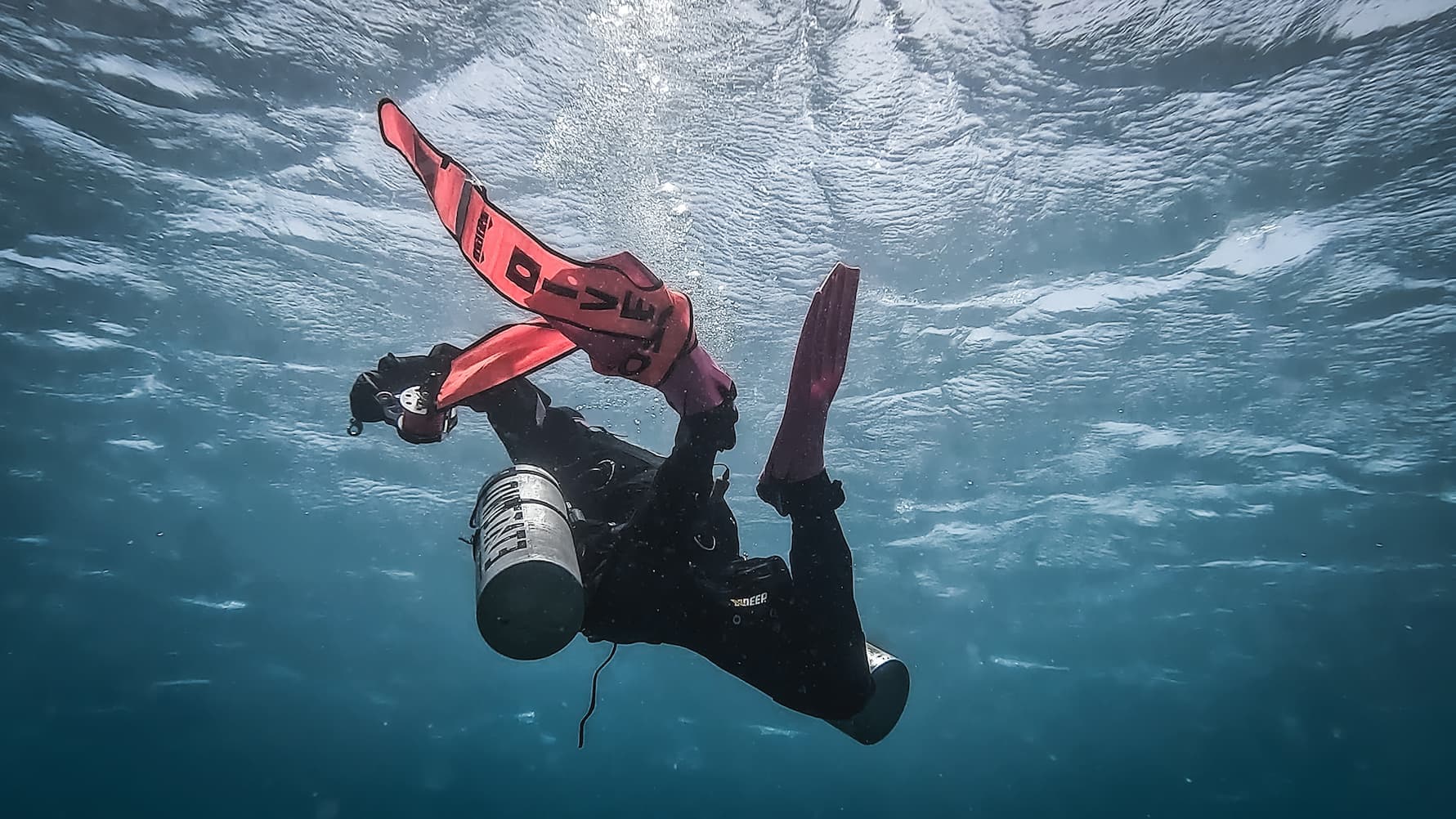
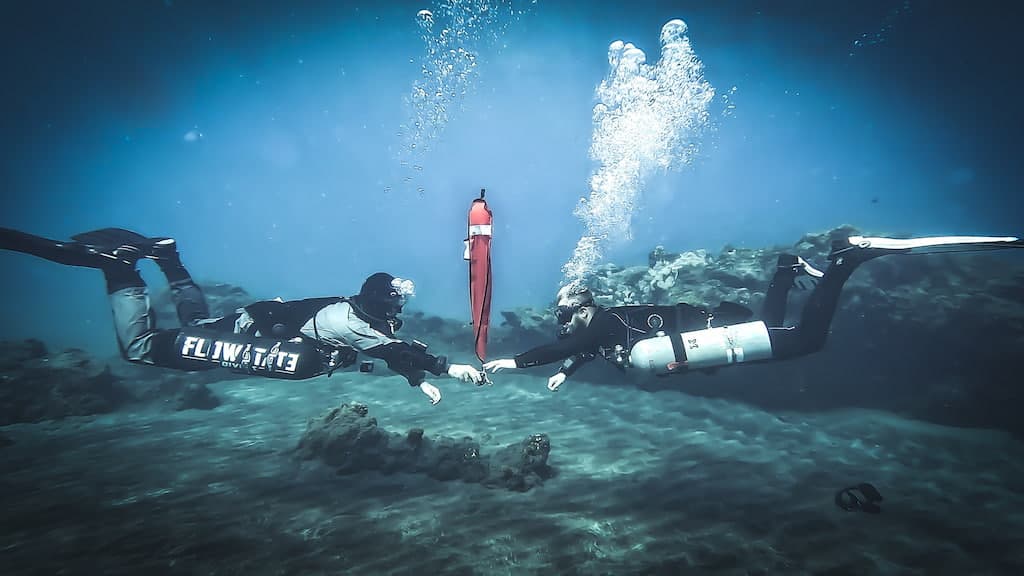
The seasoned diver is no different. Each descent is a canvas. Each breath a brushstroke. Practice is not something they do - it is who they are. They rehearse shutdowns, buoyancy drills, DSMB deployments - not because they expect failure, but because excellence is a habit. Their presence in the water feels effortless, but that effortlessness is earned, not gifted.
And still, there is no destination. There is no perfect dive. There is only the ongoing act of refinement. The diver trains not to arrive, but to become - more aware, more fluid, more calm. And if the practice ever stops, so does the progress. The mental clarity gained through mastery begins to cloud. Muscle memory stiffens. Grace turns back into effort.
This is why the greatest divers are often the ones who return to the basics, over and over. Not out of doubt, but out of reverence. Because the dive is not a performance. It is a meditation. And the ocean does not care how many dives you've logged. It reflects, without judgment, how well you’ve trained.
The road of mastery leads nowhere final. That is its beauty. The point is not to be perfect - but to be on the path. Practicing. Always practicing. Because in doing so, you become not just a better diver - but a more attentive, intentional human being.
And in the silent spaces between breaths, where the water holds you still, that is where the transformation begins.
The Zen of Mastery
Dedicated practice in scuba diving is a form of meditation - not the kind where one sits still, eyes closed, seeking silence, but a moving meditation where awareness is honed through action. Every motion underwater becomes a mirror, revealing the subtle dialogue between intention and outcome. Buoyancy control is no longer just a skill; it becomes breath itself - a continuous, invisible thread weaving balance into the body. Trim becomes an extension of posture and presence. Propulsion becomes rhythm. Awareness radiates outward: to teammates, to terrain, to the delicate tension in the water.
A diver trained in this way does not simply 'perform' skills. They inhabit them. Movements become effortless not because they are easy, but because they are owned - shaped through hours of mindful repetition. A truly trained diver enters a state of flow where there is no separation between action and awareness. Nothing is rushed, yet everything is deliberate.
Zen reminds us: the result is not the point. The process is the practice. Ego seeks reward, recognition, and arrival - but mastery lives in humility. It’s not about the perfect dive, but about perfecting the approach: staying curious, staying honest, returning again and again to the basics, not as a chore but as a form of devotion.
In this way, diving becomes something more than recreation. It becomes liberation. Because the more we refine the craft, the less we are bound by uncertainty. We stop reacting and start responding. We conserve mental energy not through shortcuts, but through understanding. We reclaim bandwidth - to observe the patterns of fish, the breath of the sea, the quiet needs of our teammates, the emotional tempo of a dive. We become present, and that presence is expansive.
There is a profound joy in this kind of mastery - not the shallow thrill of ticking boxes, but the deeper satisfaction of alignment. Of knowing your place in the water. Of trusting your instincts because they’ve been forged by practice. Of giving your attention fully, without friction.
Why Practice Matters
Without dedicated practice, skills atrophy. Muscle memory fades. Reaction times slow. Confidence becomes fragile. Even divers with thousands of logged dives can find, over time, that without active refinement, sloppiness creeps in. Trim begins to drift. Buoyancy pulses become reactive rather than smooth. Equipment handling turns hesitant. Awareness narrows. What once felt second nature starts to feel uncertain.
And the stakes, in diving, are never trivial. This is not a sport of abstractions - it’s a practice where water reveals every weakness and amplifies every hesitation. In a moment of stress, confusion, or malfunction, you will not rise to the occasion. You will fall - fall to the level of your training. And if your training is old, fragmented, or neglected, it will show. In how you respond. In how you breathe. In how others trust you - or don’t.
The Stoics taught premeditatio malorum - the premeditation of adversity - as a way to prepare the soul for difficulty. Not out of fear, but out of clarity. In diving, we mirror this through practice. We rehearse the failures before they happen, so when they do, we are not caught off guard. We do not train because we are anxious. We train to be free of anxiety. This is not paranoia—it is preparation for peace.
The martial arts have long understood this. In disciplines like Aikido or Karate, the repetition of kata - the formal practice sequences - is not just physical. It’s a spiritual exercise. The form shapes the practitioner. Through repetition, technique becomes temperament. Presence becomes posture. So too in diving: we drill our skills not only to become competent, but to become calm. Every DSMB deployment, every valve drill, every mask removal is not just a task—it’s a meditation. A commitment to presence under pressure.
Zen reminds us: 'The way is in the practice.' There is no shortcut to mastery. No single certification or ‘experience level’ that grants it. Mastery lives in the doing. And doing again. And again. We train not to impress, but to embody. Because the most dependable diver is rarely the flashiest. They are the ones who have repeated the fundamentals until they disappear. Until action flows without thinking. Until skill becomes second nature - and second nature becomes first.
Because the better trained you are, the more relaxed you become. And the more relaxed you become, the more you see. You notice your teammates more. You notice your breathing. You notice the way light moves through the kelp, the stillness behind a shark’s glide, the rhythm of the sea. The better your practice, the deeper your presence. And the deeper your presence, the more profound your connection to the ocean becomes.
Practice is not a means to an end. It is the way itself. A way of diving. A way of being. A way of returning - over and over - to the question: Am I ready? Am I present? Am I practicing what matters?
Every Dive Is a Practice Dive
One of the great illusions in diving is the separation between 'fun dives' and 'training dives.' As if refinement, precision, and skill are burdens to be shouldered only in the confines of a course, while leisure is something separate, floaty, and carefree. But to those who pursue mastery, this dichotomy doesn’t exist. Because to a dedicated diver, every single dive is a practice dive.
Every descent is an opportunity. Every breath, every movement, every moment underwater is part of your training. Whether you’re exploring a shallow reef or deep diving with stages at depth, your body, your technique, and your awareness are in play - and being shaped. The only question is whether you’re aware of it.
There are foundational elements that accompany you on every dive:
Buoyancy. Trim. Propulsion.
They’re not optional. They don’t pause when the dive becomes 'fun.' They are always present - and they are either reinforcing good habits or deepening bad ones.
Breath control isn’t something you switch on during a training session and forget when taking photos. It is the engine of your stability, the thread that connects your mind to your movement. Every inhale and exhale is a chance to hone it. Are you controlling your buoyancy through the lungs or your inflator? Are your pauses deliberate or anxious? These questions are not just technical - they’re reflective. The breath is where calmness lives. And it can only be mastered through repetition.
Buoyancy is the quiet skill that tells the story of your internal discipline. The diver who is able to float motionless, without changing their position in the water column, has put in the hours. This doesn't come from remembering what to do - it comes from feeling it. Every dive you do reinforces your buoyancy control, and if you’re not consciously practicing, you’re unconsciously regressing.
Trim is the posture of presence. It’s not just about looking good in the water - it’s about balance, readiness, and control. A diver in proper trim isn’t fighting gravity or the environment - they are aligned with it. Trim affects how you move, how you rest, how you respond. And it affects your team, too - because a diver out of trim is unpredictable. On every dive, your trim is speaking for you. What does it say? Does your body express tension, collapse, or intent? Small shifts in posture create large shifts in experience. Refine it. Observe it. Own it.
Propulsion is not simply how you move, but how you impact your environment and your team. The difference between an efficient frog kick and a flutter kick is not subtle - it’s the difference between working with the water and working against it. You are always working with your legs. Therefore, you are always practicing. And if you’re not correcting it consciously, you’re deepening habits that will be harder to undo later.
The Quiet Power of Deliberate Diving
But even when these are not possible - even when you are on a guided dive, a casual shore entry, or a spontaneous fun dip - there is still practice to be done.
Before the dive, choose one or two focal points. Make them simple and specific:
- 'Today I will focus on breathing steadily during descents.'
- 'I will maintain my trim throughout the entire dive, especially when hovering to observe.'
- 'I will frog kick the entire dive and avoid any contact with the bottom.'
- 'I’ll be aware of my teammate’s position and adjust proactively.'
These are not burdens. These are intentions. They elevate an ordinary dive into a training opportunity. They make the dive more immersive, more focused, more rewarding.
After the dive, review what happened. Not vaguely - specifically. What went well? What needs refinement? Did you actually execute the thing you planned to focus on? Were you mentally present, or did you drift into auto-pilot? The post-dive debrief is where awareness is sharpened. Without it, practice turns into unconscious repetition. With it, every dive becomes a step forward.
Always film it.
One of the best ways to improve is to see yourself. Footage is brutally honest - it reveals where your trim breaks down, how your body position shifts under task loading, and whether your kicks are as clean as they feel. Review it together with your teammates - not to judge, but to grow. What a teammate sees might be something you’ve never noticed about yourself. You can’t accurately assess your performance by feel alone - make sure your training is captured on video.
The Road Never Ends
You will never be done learning to dive well. Not because you're not good enough, but because the very nature of diving - like life itself - is not a thing to complete, but a process to become immersed in. Each dive offers a mirror: of your awareness, your control, your comfort, your clarity. And each time you think you’ve arrived, something subtle invites you to look again. A small shift in your balance, a moment of tension in your breath, the line of your finning - what felt fluid might still hold resistance.
The temptation to measure progress by achievement - certifications, depths, numbers - is strong. But these are only milestones, not destinations. The real richness lies in learning to enjoy the terrain itself. To fall in love with refinement. To notice that on your tenth dive, you struggled to stay still; on your hundredth, stillness becomes your language. Not just because you’ve 'mastered' it, but because you’ve learned to listen. To slow down. To pay attention.
There is something sacred about learning in this way - without rush, without an endpoint. When you stop trying to 'get there,' you begin to really notice where you are. You stop performing and start absorbing. You begin to feel joy not from the result, but from the sensation of the process itself - the glide of a perfect frog kick, the balance of a well-timed breathing pattern, the invisible coordination of your movements with your environment. That joy is available every time, to any diver, regardless of level. You don’t have to be the best. You just have to be present.
Progress, then, becomes a quiet pursuit. Not of more, but of better. Not of conquering the environment, but of merging with it. It's an unfolding, not a race. The road never ends because it’s not supposed to. And once you realise that, you stop chasing the horizon - and you start enjoying the walk.
The Art of Practicing Practice
Practice alone doesn’t lead to mastery. Only perfect practice does. This is more than a clever turn of phrase - it’s a profound truth that sits at the heart of all meaningful development. Repetition is not enough. In fact, repetition without understanding, without awareness, without a standard of excellence, risks doing more harm than good. It ingrains habits not through intention but through inertia. You end up reinforcing flaws, encoding inefficiencies, normalising compromise.
To truly improve, a diver must first be taught how to practice. Not just what to do, but what to feel when it’s being done right. They must be guided into the subtle awareness of what it means to hover without effort, to kick without disturbance, to breathe without thinking, and to move without leaving a trace. This cannot be learned through casual experience. It must be shown, felt, corrected, refined. In those moments, under the close attention of someone who knows what to look for, a door opens. A reference point is formed. The body learns what 'correct' actually feels like - not just what it looks like from the outside, but what it feels like from within.
Once that internal compass is set, independent practice becomes not only possible but deeply effective. The diver is no longer guessing. They are no longer hoping that repetition will eventually bring clarity. They now know when something is off, and more importantly, they know how to bring it back into alignment. This is why our approach to training emphasizes this above all else: not just to pass on knowledge, but to pass on the capacity to train oneself. We aim to give our divers the tools to become their own instructors, to carry a sense of precision and curiosity into every dive they do, long after formal training ends.
This philosophy reflects a deeper principle: mastery is not built during the moments of performance, but in the quiet hours of intentional preparation. The moments when no one is watching. The early morning dives. The silent repetitions of valve drills. The measured descents, the controlled ascents. These are not done to impress - they are done to align. To align action with awareness, body with intention, skill with understanding.
But none of this can happen without first learning how to practice correctly. This is the invisible threshold between stagnation and growth. The difference between someone who dives hundreds of times without truly improving, and someone who transforms in twenty dives because every single one was deliberate. Perfect practice sets the course. It creates a standard that refuses to allow sloppiness, excuses, or shortcuts. And it does so not with pressure or judgment, but with clarity and purpose.
In this way, teaching someone how to practice is not just about diving - it’s a gift that echoes across everything they do. It teaches discipline without rigidity. It fosters freedom through form. It replaces confusion with confidence. And ultimately, it allows each diver to take ownership of their journey. To become not a follower of rules, but a steward of excellence. And that is when practice becomes something far greater than a means to an end. It becomes a way of being.
Crafting the Diver Within
In the end, true progress isn’t measured by comparison, but by commitment - to yourself, your teammates, and the environment you move through. The real transformation happens when diving becomes more than a hobby - when it becomes a discipline. A path. A craft worth honing.
To walk that path well, seek out a mentor who will teach you the correct techniques and show you not just what to practice, but how to practice. Learn what precision feels like. Ask for feedback constantly - not as criticism, but as insight. Surround yourself with those who value refinement over ego, and depth over display. Above all, carve out the time to train - not just to go diving, but to dive with purpose.
Because every dive holds the potential to sharpen your awareness, to polish your technique, and to bring you closer to something meaningful. Not perfection, but presence. And when you train with that kind of intent, you don’t just become a better diver. You become a better partner, a better thinker, a better version of yourself - quietly shaped by the discipline of the water.