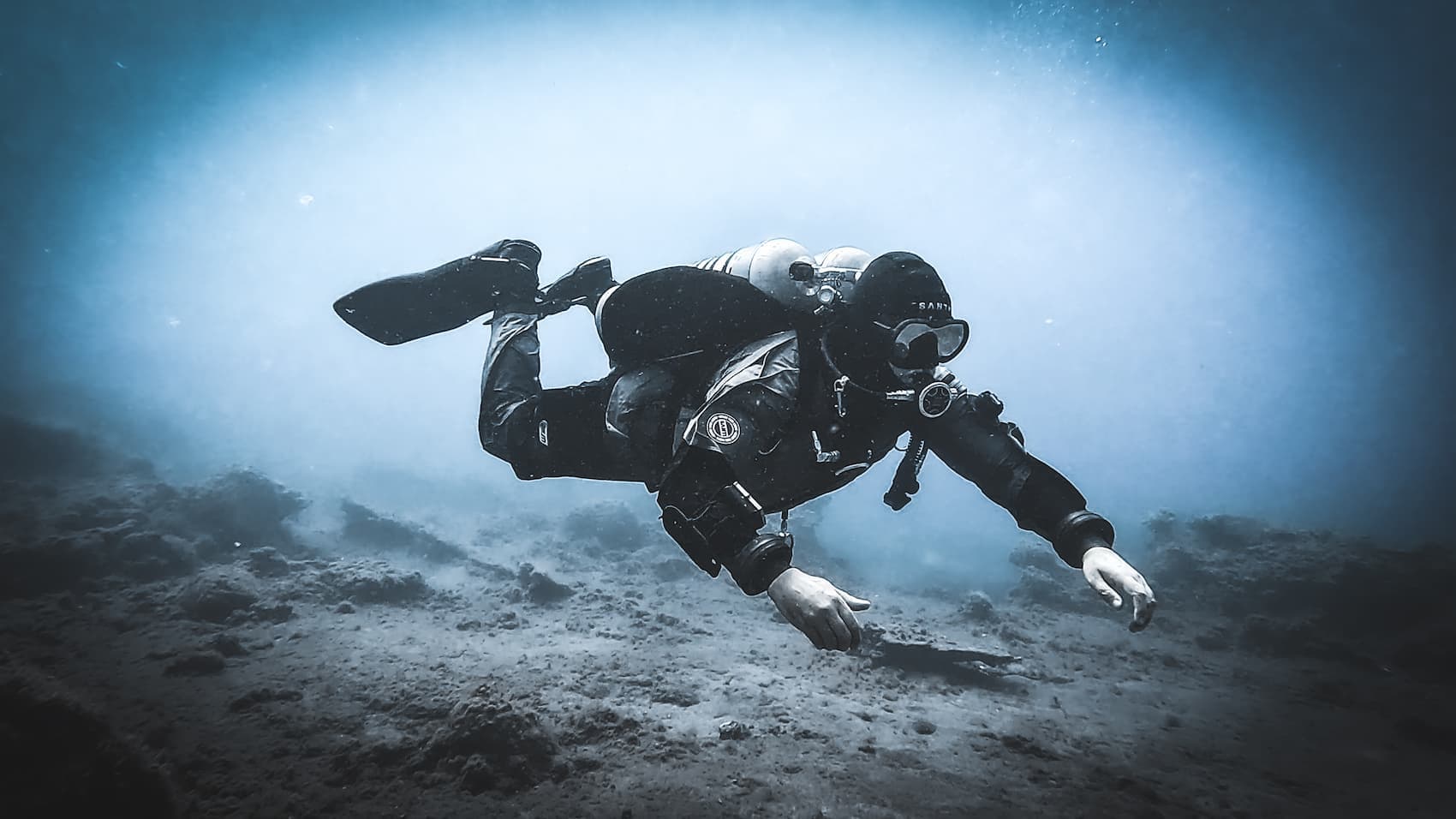
Descent Into Presence - The Hidden Discipline of Flow in Scuba Diving
We live in a world of distraction. Information, responsibilities, noise - everything competes for our attention. But beneath the surface, something different happens. The clutter falls away. Focus sharpens. You stop thinking about being present, and simply are.
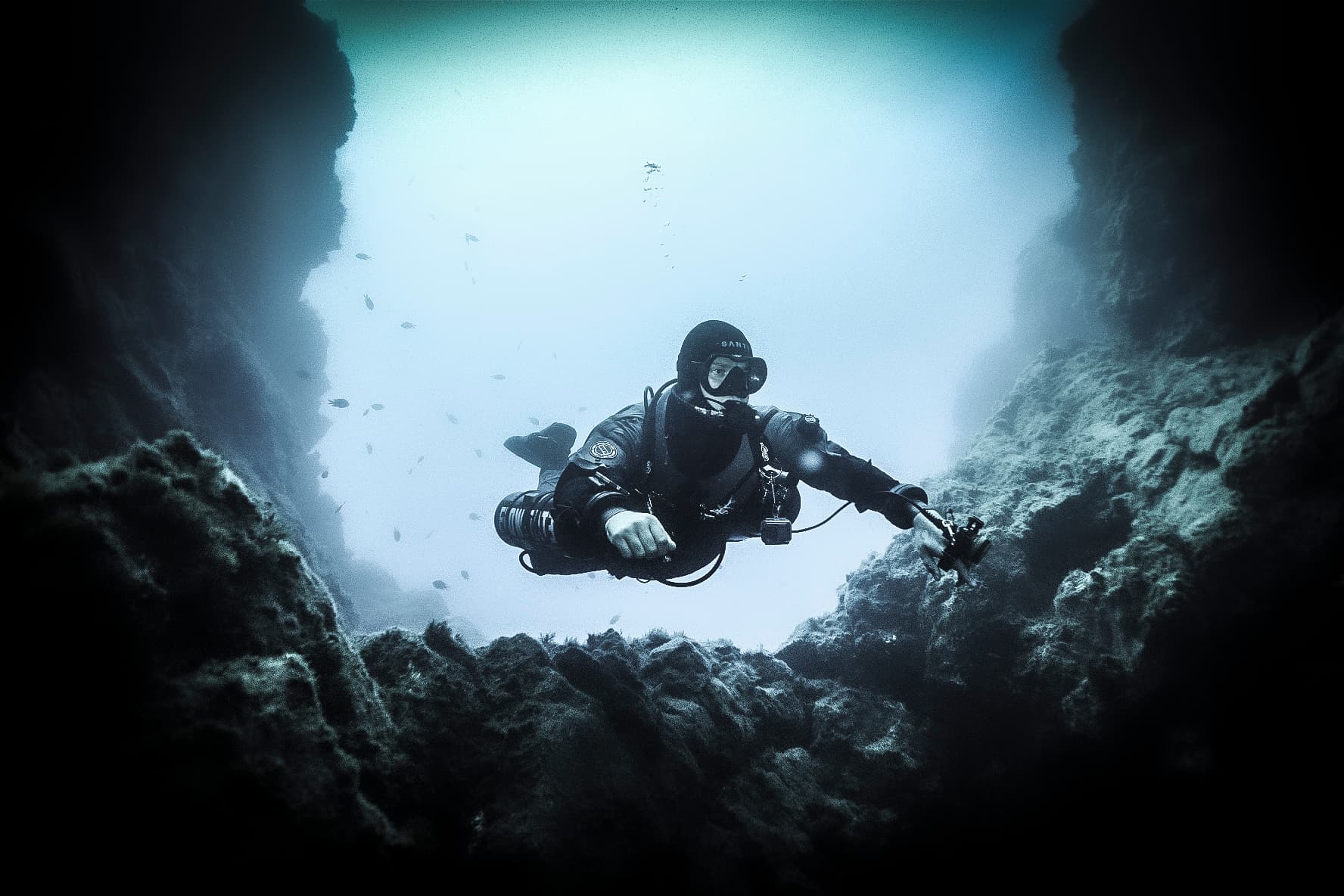
If you’ve ever experienced that moment on a dive where everything clicks - your breathing, your buoyancy, your awareness - you’ve touched something rare. That’s flow. A mental state where thought and action merge, where awareness becomes precise and effortless.
Scuba diving, when practiced with intention and mastery, is one of the most direct paths to that state. More than sport. More than recreation. It can become a kind of active meditation, one that is earned, not stumbled into.
This article explores the science of the flow state, why diving is uniquely suited to invite it, and how we can transform the underwater experience into something far deeper: a discipline of presence.
The Science of Flow
Psychologist Mihály Csíkszentmihályi, one of the founding figures of positive psychology, coined the term flow to describe a state of optimal experience - when a person is so completely absorbed in an activity that their sense of self, time, and even effort seem to vanish. In his research spanning decades and cultures, Csíkszentmihályi found that people from all walks of life - artists, surgeons, athletes, monks - described this same mental zone, often using phrases like 'carried by a current' or 'being in the zone.'
Neuroscience Dive Note:
Research suggests that immersion in water itself increases vagal tone, slows heart rate, and reduces activity in the brain’s default mode network—key ingredients for flow.
Flow is not merely pleasure or relaxation. It is a paradoxical harmony of high challenge and high skill, a mental state that feels effortless only because the diver (or artist, or athlete) is operating at the peak of their capacity. In flow, awareness and action merge. You don’t think about what you’re doing. You are doing it. The experience becomes autotelic - done for its own sake, not for external reward.
According to Csíkszentmihályi and subsequent research in neuroscience and performance psychology, several core conditions enable flow:
1. A Clear Goal
In diving, this might be as simple as 'stay perfectly neutral for the next 10 minutes,' or 'descend to 20 meters maintaining team formation.' These are concrete, immediate, and engaging.
2. Immediate Feedback
To remain in flow, the brain requires continuous feedback from the environment. The feedback doesn’t need to be verbal, it can be the sensation of a smooth fin stroke, the rising of your chest as you inhale, the stillness of perfect trim, or the responsiveness of your team to a hand signal.
In diving, this feedback loop is built into every moment: buoyancy, gas consumption, awareness of depth and team position, self and environmental awareness. Your body and environment constantly inform your performance.
3. A Balance Between Challenge and Skill
This is the most delicate and essential component. If the task is too easy, you become bored. Too difficult, and anxiety arises. But when your current skills meet the demands of the situation precisely, the mind locks in.
In scuba diving, this balance is dynamic. A new diver managing trim, breathing, and orientation may find even shallow dives absorbing. A highly trained diver may require complex environments - caves, currents, decompression - to remain fully engaged. The dive must stretch the diver just enough to require complete attention.
4. Total Concentration on the Task
Flow excludes distractions. The default mode network, the part of the brain responsible for self-referential thinking and mind-wandering, actually deactivates during deep flow. What remains is task-specific activation. In other words: your brain stops thinking about you and thinks only about doing.
Underwater, this state is almost designed for you. Ambient noise is minimised. Movement is slow. Conversation is impossible. The very structure of the underwater world favors focused awareness.
5. A Merging of Action and Awareness
In flow, action is no longer preceded by conscious deliberation. There is no pause between intent and execution. You don’t think now I need to kick. You just kick. You don’t think keep eye contact with your team. You just do. The internal dialogue fades, replaced by seamless, almost instinctive control.
For divers who’ve trained their fundamentals well, this is a familiar sensation. They describe dives that feel like a 'dance' or like 'being one with the water.' That’s the merging of action and awareness. It’s not a metaphor - it’s flow.
6. A Loss of Self-Consciousness
Flow suppresses the ego. You stop monitoring how you look, how you’re performing, what others think of you. The inner critic goes quiet. This loss of self-awareness isn’t dissociation - it’s integration. You are no longer separate from the task; you are the task.
This is one of the most healing and profound aspects of diving. The water does not judge. It doesn’t care about your resume, your stress, your plans. The ocean asks only one thing: be here now. And in that demand, there is peace.
7. An Altered Sense of Time
In deep flow, time distorts. Minutes pass like seconds. Or seconds feel stretched and rich with detail. You surface from a dive and can’t quite remember how long you were under - it felt like a moment, and a lifetime.
Neurologically, this happens because the brain’s timekeeping centers - the dorsolateral prefrontal cortex and the parietal lobe - decrease activity during flow. You’re no longer 'tracking' time. You’re simply in it.
Why Diving Invites Flow
Something subtle happens when you slip beneath the surface. The world above loses its urgency. Time changes shape. And without ceremony, you begin to arrive - in your body, in your breath, in the moment. This is not an escape. It’s access. Diving doesn’t distract you from reality; it delivers you into a deeper layer of it. One that doesn’t tolerate divided attention or wasted movement. One that calls for presence.
In our daily lives, breathing is unconscious, background noise to the task of being human. But underwater, breath steps forward. You don’t breathe out of habit. You breathe with precision. Every inhale carries you upward. Every exhale settles you downward. The consequences are instant and unambiguous. This is not conceptual mindfulness. It’s tactile, physical awareness. You feel your breathing. You see its effects. It anchors you. There’s no effort required to focus on your breath because focus is a requirement. In this way, breathing becomes your compass, your rhythm, and your teacher. It slows the mind, quiets the internal noise, and draws attention inward not as an act of will, but of necessity. Breath by breath, the diver finds stillness in motion.
Flow doesn’t thrive in chaos. It flourishes in simplicity, in reduced input, in narrowed focus. The underwater world offers this effortlessly. There is no chatter. No screens. No traffic. Even your own voice is gone. What remains is the hum of your regulator and the soft flutter of fins through water. This silence isn’t empty. It’s full of texture. It invites you to notice more, tiny shifts in light, the dance of particles in the beam of your torch. You begin to listen in ways you don’t on land. Your senses recalibrate. And in that reduction of noise, clarity rises. Not because you’re trying to be mindful, but because the environment encourages nothing else. Diving removes distraction not through discipline, but by design. That’s what makes it so fertile for flow. It strips the non-essential and offers a space where only presence makes sense.
Many divers treat neutral buoyancy as a technical milestone - a requirement to check off before deeper dives or advanced courses. But in truth, it is the entry point to something much more profound. When your trim is aligned, your buoyancy tuned, and your propulsion refined, the effort of diving disappears. You stop adjusting. You stop correcting. Your body knows what to do. You enter a state of physical fluency where movement becomes expression, not effort. This freedom - this lack of internal friction - liberates the mind. Your awareness extends outward. You’re no longer focused on managing yourself; you’re open to experiencing the environment in full. You notice the way the reef breathes with the tide. You anticipate the movement of your teammate without needing to look. Your perception expands beyond your body into the space around you. This is moving meditation. Not through stillness, but through skill. A meditation earned through practice. And it’s here that the mind begins to soften, to stretch, to open.
There is a wordless intelligence in the ocean. A kind of truth you don’t study, you feel. When you find yourself suspended in a cathedral of kelp, or drift past the slow eye of a stingray, or hover in the light-drenched stillness of a wreck’s doorway, your thoughts don’t vanish - they simply become quiet. Awe is not fantasy. It’s a physiological and psychological reset. Neuroscience shows that states of awe decrease mental chatter, increase feelings of connection, and even recalibrate our perception of time. They remind us that we are not at the center of the universe - and that this is a relief, not a loss.
To dive well is to come face to face with that humility, and to realise it doesn’t diminish us. It liberates us. The boundaries between observer and environment blur. You no longer watch the ocean. You become part of it. This shift - this collapse of separateness - is at the core of why diving becomes fertile ground for flow. Because flow is not just about performance. It’s about presence. It’s about immersion so complete that you forget to measure yourself. And in that forgetting, you arrive.
Diving, then, becomes a gateway - not only to the ocean, but to a mode of being that many people spend years chasing through yoga, meditation, or mindfulness practices. The difference is that here, flow is not abstract. It’s embodied. It’s something you feel in your lungs, your muscles, your timing, your proximity to your teammate. It’s real. This is the bridge - from diving as a sport or leisure activity to diving as an inner practice. From descent as depth to descent as awareness. And it brings us to the heart of this experience: that diving, when done with intention and competence, becomes a form of active meditation - a way to cultivate not just skill, but presence. The next step is understanding how we train for this. Because while the state of flow may feel spontaneous, it is always built, never given. It begins with preparation, and culminates in transformation.
Diving as Active Meditation
Flow does not arise by accident. It is not gifted to the unprepared. It is constructed, breath by breath, dive by dive - through discipline, intentional practice, and the willingness to let go of distraction in favor of presence.
Just as a freediver conditions the body to embrace stillness at depth, or a martial artist drills fundamentals until movement flows without thought, the diver too must transform practice into presence. The underwater world does not accommodate half-attention. It demands - and rewards - totality.
This is where diving becomes something more than a skill. It becomes a form of active meditation. Not passive. Not static. But deeply embodied, dynamic awareness. Not the kind that asks you to sit still and breathe in silence, but the kind that asks you to move well, breathe well, and think clearly in every moment.
Let us examine the path toward that state.
Step One: Mastery Before Stillness
You cannot meditate in chaos.
If your trim is unstable, if your buoyancy rises and falls with each breath, if your breathing is erratic and your mind is half on your gear and half on your fears - there is no room for flow. There is no inner quiet.
Control must come first.
This doesn’t mean perfection. But it does mean competence. Neutral buoyancy that holds still without thought. Trim that doesn’t need adjusting every five seconds. Breathing that is calm, slow, efficient - not just for gas consumption, but for mental rhythm. Equipment that is streamlined and familiar, not a source of friction.
This level of control is not cosmetic. It is foundational. The brain can only let go when the body feels safe.
When your body knows it’s balanced in the water column, that your fins will respond with precision, that your gear is in place and your teammate is exactly where they should be—then, and only then, can the mind exhale.
True stillness is built on skill.
Step Two: The Right Team
No one flows in isolation.
The presence of others can be noise or it can be resonance. It depends on who you dive with - and how.
A well-trained team is not just a group of divers. It is a fluid system. Movements are deliberate. Communication is non-verbal, almost telepathic. There is no need to check where your team mate is. You know. Because they’re always there. Just in the corner of your vision, just where they’re supposed to be.
There are no hurried kicks. No frantic hand signals. No flailing. Everything slows down. Because everyone is trained, composed, and attentive. Trust replaces the need for constant management. Space opens for awareness, not just of yourself - but of the collective.
This isn’t 'buddy diving.' It’s a co-created mental state.
In that space, where all divers are attuned to one another, something rare happens: you stop being separate. The team becomes a unit. You move as one.
This is how flow expands from the individual to the collective. It is one of the most beautiful experiences diving can offer.
Step Three: Strip Away the Non-Essential
In a world that constantly demands more, diving teaches the value of less.
The deeper you go - not in meters, but in experience - the more you realise that flow isn’t found by adding more gadgets, more goals, more distractions. It’s found by removing.
Leave the camera behind. You don’t need to capture anything. You need to witness it.
Skip the mental checklist of creatures and photo ops. Forget how many meters you’ve covered or what depth your computer reads.
Let go of the idea that you are 'doing a dive.' And start being in the dive.
Breathe. Observe. Tune your awareness to the smallest details:
- The way the light refracts through your bubbles
- The tiny sway of a coral polyps
- The shifting temperature as you pass a thermocline
- The rhythm of your inhalation and exhalation - slow, circular, calm
These are not trivial sensations. They are anchors for awareness.
The ocean does not ask you to chase it. It waits for you to arrive.
So slow down. Don’t task-load your dive. Don’t race to tick boxes. Let presence be the objective. Let the dive come to you.
When you remove what’s unnecessary, what remains is pure attention.
Step Four: Breathe With Purpose
Breathing is the original meditation. Every major contemplative tradition begins with it. Diving doesn’t change this - it makes it visceral.
In the water, breath becomes a form of communication. It tells your body that you’re safe. It regulates your buoyancy. It keeps your mind tethered to the now.
But beyond function, breathing underwater becomes rhythm.
When done deliberately - deliberate and smooth inhales… even longer, quieter exhales - you begin to enter a cadence that reshapes your entire awareness. The world narrows. The moment lengthens. This is meditation in motion.
Train your breath not just for efficiency, but for elegance. For steadiness. For grace.
This isn’t spiritual. It’s physiological. Breath regulates the nervous system. It settles your focus. It dials you into the right frequency for flow.
And once you know how to find that breath, you can carry it with you - above and below the surface.
Step Five: End with Reflection
The dive doesn’t end when you surface. To cultivate diving as meditation, build in a moment of reflection. Not analysis - awareness.
Ask yourself:
- Where did I feel most present today?
- What pulled me out of the moment?
- How did my body feel in the water?
- How was my connection with the team?
- What can I let go of next time?
This isn’t about critique. It’s about integration. The lessons of presence don’t just belong underwater. They echo into life on land.
You’ll find yourself breathing slower in traffic. Moving more deliberately at work. Listening more deeply in conversation. All because you trained your attention where it matters most: in the moment
Final Thoughts
Flow may feel like magic, but it’s forged through discipline. It’s not something you wait for, it’s something you train for. The quiet joy of a dive where everything aligns, where your movement feels effortless and your awareness expands, is not a happy accident. It’s the result of preparation, precision, and presence. That moment where the ocean seems to open up and receive you, where thought dissolves into action, begins long before you reach depth. It begins in the commitment to refine your fundamentals, to strip away inefficiency, to listen carefully to your breath and your body.
Scuba diving, at its highest expression, is not about depth or distance, it’s about depth of attention. It invites us to be more than underwater tourists or checklist-driven adventurers. It offers a way to practice presence, to cultivate stillness in motion, to enter a relationship with the water that is based not on control, but on harmony. In that relationship, something profound becomes possible: a shift from doing to being, from task to awareness, from surface-level experience to inner transformation.
Ultimately, the promise of flow isn’t just a better dive. It’s a better way of being. One where we move through the world with clarity, with focus, and with the calm confidence that comes from knowing we’ve trained our minds and bodies to meet the moment fully. Diving, when approached as a discipline of presence, becomes more than a sport, it becomes a path. One that leads us not away from life, but more deeply into it.
This is why our XBASE program bundle was designed from the ground up with one purpose: to unlock flow. Every element - neutral buoyancy, breathing control, situational awareness, precision movement, and team cohesion - is not just a skill to tick off, but a doorway into presence. We don’t train for checklists; we train for transformation. Because when the fundamentals become second nature, your mind is freed to expand, to notice, to merge with the moment. XBASE isn’t just about making better divers. It’s about creating the conditions for deeper experience - where the surface noise drops away, and flow begins.